

What Losing Fred Vasseur Means for Ferrari and its Academy Drivers
By Katie Hawthorne, Communications Manager at DCM.
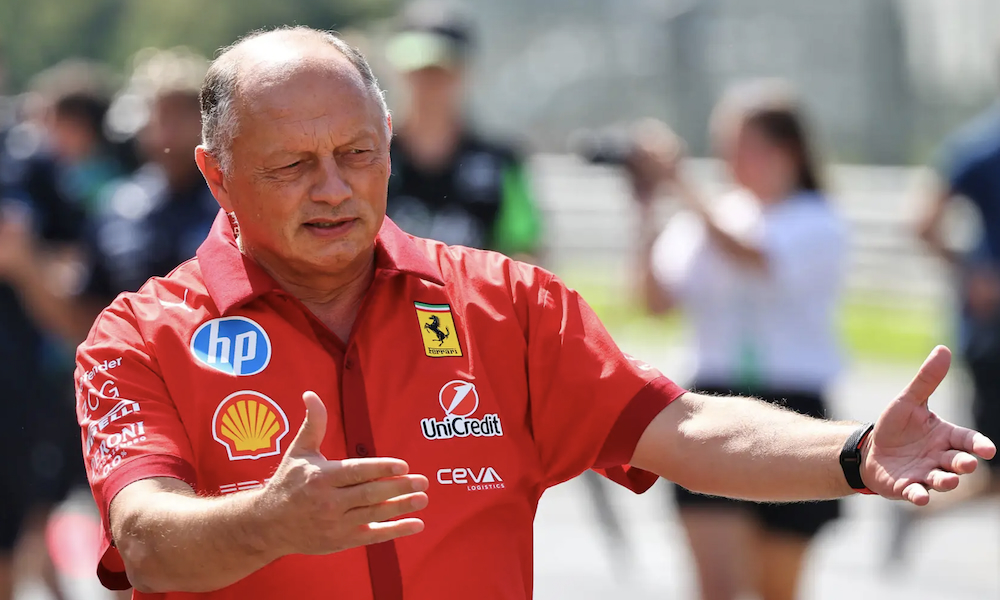
Formula 1 thrives on cyclical narratives, and the latest paddock speculation surrounding Maranello highlights the intense, unrelenting pressure that comes with racing for the sport’s most iconic team. Reports indicating that Scuderia Ferrari leadership may be exploring a succession plan for Fred Vasseur underscore the incredibly high standards set by chairman John Elkann and CEO Benedetto Vigna. When a team operates under a global spotlight, every performance deficit—such as the current gap to a dominant Mercedes team—is met with rigorous evaluation.
However, transitioning away from Vasseur’s leadership at this juncture introduces significant strategic challenges. A pivot now could disrupt the hard-earned stability of both the Formula 1 grid operations and the foundational pipeline of the Ferrari Driver Academy (FDA).
Vasseur’s tenure, which began in 2023, brought a highly regarded pragmatic approach to Maranello. As a seasoned motorsport veteran with deep roots in junior formulas, he introduced a stabilizing presence that helped steer the team back to race-winning ways. While recent execution errors and a tough points deficit have understandably accelerated the timeline for corporate reviews, a sudden change in leadership carries distinct risks for the team’s core assets.
Vasseur has been a central figure in managing Ferrari’s prestigious driver line-up. His long-standing rapport with Charles Leclerc provided a strong foundation of trust, and his presence was highly influential in securing Lewis Hamilton’s historic move to Maranello. Introducing a new management structure just as this formidable pairing prepares to navigate a complex regulatory cycle could complicate team synergy.
A change at the top naturally invites speculation regarding potential successors, whether from rival teams or internal promotions. Any incoming principal will inevitably require time to adapt, potentially shifting the organization’s focus toward rebuilding internal structures rather than maximising immediate on-track performance.
Beyond the immediate F1 pit wall, a shift in leadership would also resonate deeply within the Scuderia’s junior program. Having co-founded junior racing powerhouse ART Grand Prix, Vasseur brought a unique talent-first philosophy to the FDA, understanding the delicate transition from junior categories to the pinnacle of motorsport. A change in management could shift the academy’s outlook in two key areas.
Under Vasseur, the FDA has been treated as a highly functional asset for future integration. A new team principal, working under an intense mandate to deliver immediate championship results, may naturally lean toward proven, veteran stability rather than taking structural risks on rookie talent.
If the team enters a transitional rebuilding phase under new management, the immediate pressure to secure wins could limit opportunities for younger drivers. For the promising talent currently climbing the Formula 2 and Formula 3 ladders, the pathway to a race seat at the Scuderia or its partner teams could become significantly tighter.
The challenge for Ferrari lies in balancing the intense, justifiable urgency for world championship titles with the long-term structural health of the organization. The ambitious goals set by leadership create a high-stakes environment where patience is a luxury.
Steering through the opening chapters of a new regulatory era requires immense organizational alignment. While the desire to optimize performance is understandable, maintaining continuity is often the most reliable path to a championship. Ensuring that this stability extends from the world-class driver pairing down to the academy ranks remains crucial if the Scuderia is to convert its immense potential into sustained historic success.
Media Contact
Katie Hawthorne
Communications Manager
media@driverclubmanagement.com
Latest News
What Losing Fred Vasseur Means for Ferrari and its Academy Drivers
By Katie Hawthorne, Communications Manager at DCM. Formula 1 thrives on cyclical narratives, and the latest paddock speculation surrounding Maranello highlights the intense, unrelenting pressure
Mapping the Smartest Route into F1
By Katie Hawthorne, Communications Manager at DCM. The ascent of Kimi Antonelli to a race seat at Mercedes AMG has rewritten the modern playbook for
Racing Driver Diet with Example Race Day Nutrition Plan
By Simon Hayes, Head of Performance at DCM. Motorsports athletes are some of the fittest humans on the planet. This may be surprising to some,
The Funding Challenge and the Evolution of Talent Funds
By Katie Hawthorne, Communications Manager at DCM. The cost of reaching the pinnacle of single-seater motorsport has reached a critical point. A single, competitive season